Ongecategoriseerd

Your career

Your career

Building your career at MERLN

We consider our people to be the key to achieving our ambitious aims and so we invest in their personal and professional development through a wide variety of workshops and courses. From the moment you join us, your career development is the center of attention and we will do our best to help you reach your goals.

We offer you the chance to do groundbreaking work and turn future vision into technological innovations in regenerative medicine.

Not only do we provide an exciting, innovative and state-of-the-art place to work, you also get a good salary, excellent fringe benefits and an attractive package of employment terms, including:

  • Holiday pay of 8% of the annual salary plus an 8.3% end-of-year bonus
  • Possibility to work part-time (depending on the position)
  • Reimbursement of commuting costs
  • Employer pension contribution
  • A collective health insurance contract containing various discounts
  • Different personnel discounts for insurances

Read more …Your career

Internships

Internships

Internship possibilities

We welcome both Bachelors and Masters students from the UM and elsewhere to perform their internships and theses in MERLN.

What can you expect?

  • Highly interdisciplinary and customized projects.
  • Involvement in the ongoing research of the institute.
  • Learn new skills, such as:
    • Laboratory: cell culture, molecular biology, biochemistry, materials science, fabrication, microscopy, and many more
    • Computational: image analysis (CellProfiler), Virtuall Cell, R, computational modelling
    • Professional: writing skills, presentation skills, creative and critical thinking
  • A lot of fun!

How can you apply?

Interested applicants are encouraged to apply by contacting a PI directly (visit the PI pages in the cBITE, CTR, and IBE departments to learn more about their research). Applications are welcome the whole year round, but spots are limited due to the availability of supervisors and facilities, so you are encouraged to apply early. As a general rule, internships and theses are unfunded. For Maastricht University FHML students, an overview of available internships can also be found on the UM internship page.

Read more …Internships

Teaching

Teaching

Education by MERLN

MERLN’s scientists are involved in educational activities within a variety of undergraduate and graduate programmes such as the Masters of Biomedical Sciences, University College Maastricht, and the Maastricht Science Programme where we teach and tutor both theoretical as well as practical courses. Our expertise lies in biology, chemistry, materials science and engineering, with distinct emphasis on biomedical applications, including regenerative medicine.

The Masters of Biomedical Sciences

The Masters of Biomedical Sciences (BMS) focuses on state-of-the-art methodology and skills that enable researchers to unravel the molecular and cellular mechanisms in health and disease with the ultimate goal to restore health.

We coordinate one of the five specializations within BMS, "Regenerative Medicine", which aims at creating solutions to restore structure and function of permanently damaged tissues and organs by using a combination of science and technology. Topics focus on both the molecular and biological (including stem cell biology and gene therapies) and technological (including tissue engineering and bio-fabrication technologies) aspects, and the combination thereof within a clinical context. Have a look at the video which explains this Master track further or visit this site for more information.

Courses at Maastricht University in which MERLN is involved:

Lecturing:

  • CHE2001: Organic Chemistry, Maastricht Science Programme
  • CHE2002: Inorganic Chemistry, Maastricht Science Programme
  • INT3003: Biomaterials, Maastricht Science Programme
  • INT3008: Regenerative Medicine, Maastricht Science Programme
  • MBS1304: The Science and Technology of Regenerative Medicine, Master Biomedical Sciences
  • PRA3017: Applied Cell Biology, Maastricht Science Programme
  • SCI2037: Cell Biology, University College Maastricht
  • SCI3050: Advances in Biomedical Sciences, University College Maastricht

Tutoring:

  • BBS1002: Homeostasis and organ systems, Master Biomedical Sciences
  • BBS1006: Critical Appraisal of Biomedical Publication, Bachelor Biomedical Sciences
  • BBS2001: Threats & Defence Mechanisms, Bachelor Biomedical Sciences
  • BBS2002: From Cradle to Grave: Development, Ageing & Disease, Bachelor Biomedical Sciences
  • BBS2042: Cell signaling, Bachelor Biomedical Sciences
  • BBS3003: Critical Review of a Biomedical Intervention, Bachelor Biomedical Sciences
  • BIO1001: Introduction to Natural Sciences: Biology, Maastricht Science Programme
  • BIO1101: Introduction to Biology, Maastricht Science Programme
  • BIO2001: Cell Biology, Maastricht Science Programme
  • BMS2001: Designing Scientific Research, Master Biomedical Sciences
  • CHE1001: Introduction to Natural Sciences: Chemistry, Maastricht Science Programme
  • CHE2001: Organic Chemistry, Maastricht Science Programme
  • CHE3002: Transition Metal Chemistry, Maastricht Science Programme
  • ITM2105: Thinking and doing, Bachelor International Track in Medicine
  • MBS1304: The Science and Technology of Regenerative Medicine, Master Biomedical Sciences
  • PHY1002: Mathematical Foundations of Physics, Maastricht Science Program
  • PHY2002: Thermodynamics and Statistical Physics, Maastricht Science Program
  • PHY2003: Vibrations and Waves, Maastricht Science Program
  • PRA1001: Research Methods, Maastricht Science Program
  • PRA2008: Physical Chemistry, Maastricht Science Programme
  • SCI3050: Advances in Biomedical Sciences, University College Maastricht

Read more …Teaching

Social events

Social events

  • Xmas 2022

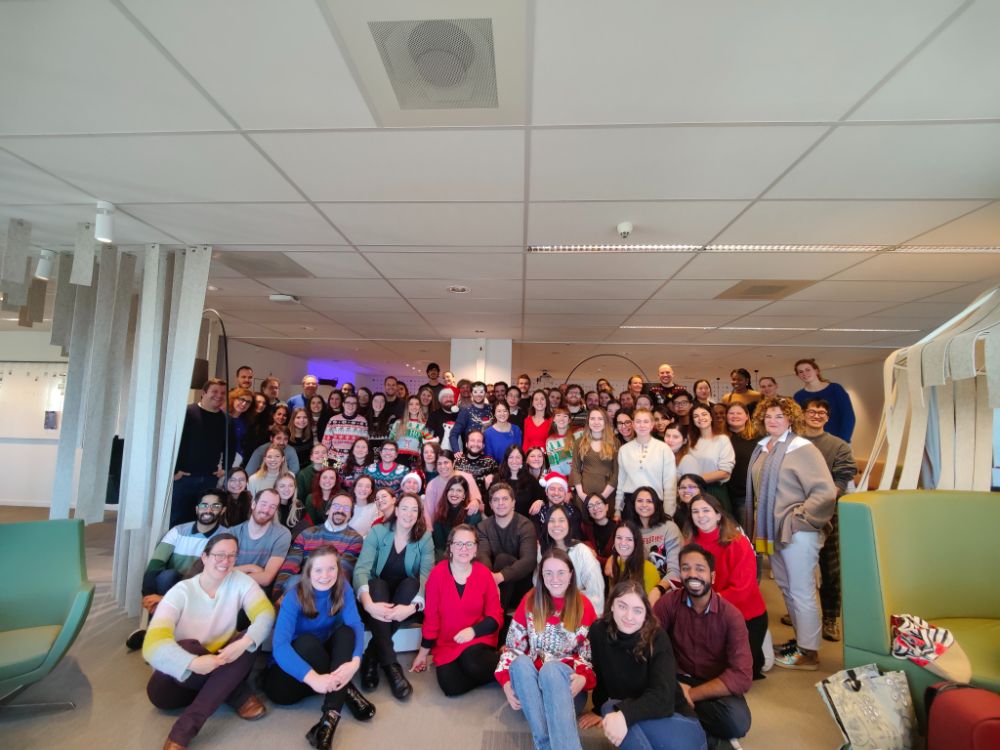
    After two years of pandemic, the traditional MERLN Xmas lunch is back again! Check out the pictures here!

    Gallery

  • Xmas 2019

    Every year MERLN organizes a legendary Christmas lunch where "country teams" prepare a typical dish from their country. Check out some of the pictures here!

    Gallery

  • Xmas 2018

    Our traditional MERLN Christmas lunch was again a huge success! Everyone prepared a typical dish from his or her country and the food was delicious! Thanks to everyone for putting your cooking skills to the test!

    Gallery

  • Durbuy 2018

    The whole MERLN Institute went on a weekend adventure trip to Durbuy where we tested our survival skills, brushed up our general knowledge in the pub quiz, and listened to inspiring talks.

    Gallery

Read more …Social events

Donations

Donations

Donations: the Excalibur Fund

At the MERLN Institute at Maastricht University, we are working on developing new therapies that can assist the body in repairing damage and thereby improving quality of life.

Our team of internationally respected Principal Investigators are working on a myriad of strategies to help cure chronic diseases. For example, we develop biomedical implants to help the body instigate its own repair mechanisms and we employ a wide range of tools and technologies to build new tissues and organs. MERLN scientists have an extensive network of colleagues at research institutions in the Netherlands and abroad, as well as with biomedical companies. These connections help us conduct our research at the highest level.

To reach our goals we can use your support! That is why we have opened the Excalibur Fund. With your donations, we can give our research an extra boost, which will contribute to fighting diseases such as osteoarthritis, cardiovascular and neural degeneration, kidney disease and diabetes.

If you would like to make a tax-deductable donation, please visit the Excalibur Fund page, hosted by the University Fund Limburg. And if you have any questions about donations or our research, please contact Dr. Dennie Hebels.

First Excalibur-funded project: Chemera

The first project that was funded by the Excalibur fund was an innovative idea for education. Tony Feliciano, Ivo Beeren, Shahzad Hafeez, and Francis Morgan had a common goal: To promote STEM education for students and young professionals by using game-style mechanics to encourage practice, comprehension and application. This led to the development of their first game: Chemera.


The content of Chemera is designed so that it follows the course structure of first year Organic Chemistry course in the Maastricht Science Program curriculum. Students can unlock the next level in the game by gathering points. The course coordinator can also freely control the available content. This method encourages students to play and reach a certain score before moving on to the next topic. They also receive feedback on their performance per learning goal. Chemera helps in making highly technical problem sets easy and fun to practice!

If you would like to try the beta version of the game, you can request a download and give feedback on their website: http://tasrlabs.com/.

Read more …Donations